

You’ve pictured what you’d be like as a parent—and you’ve imagined your little one. You may have found yourself wondering about what life would be like with a little girl or a little boy—and you may even have a preference (no shame in that game!). In that case, you might be wondering how to conceive a girl or boy and found theories galore! But can you actually control baby’s biological sex?
Ask the internet and it’ll tell you it’s possible to get pregnant with a boy or girl through sex-timing techniques. Others will claim that monitoring your diet will give you the power of sex selection. And then there are the less-than-benign methods some hopeful parents turn to: “Someone told me that if you want a boy you put baking soda in your vagina before sex. Something about changing the pH of the environment… Despite the fact that I am on my third boy, I didn’t do this,” shares jalaiaa, a community member on The Bump. “I’d be willing to try some things (within reason) to get a girl, though.”
So how much truth does the folklore behind trying for a boy or girl hold? And are there any methods you can safely try? Here’s what the experts say about the science behind how to get pregnant with a girl or boy.
Key Takeaways
- There are many theories on how to have a girl or boy. The Shettles, Whelan and babydust methods project that timing of intercourse in relation to ovulation can influence baby’s sex. While there’s lots of anecdotal evidence, there’s no scientific proof to these claims.
- Some theories suggest that eating certain diets that focus on potassium or increased calories can sway your chances of conceiving a boy or girl, but again, these haven’t been scientifically proven.
- Certain sex positions are also thought to influence whether baby’s a boy or girl. While there’s no research to back up these claims, these positions could increase overall chances of conceiving.
- The only scientifically proven way to influence whether you get pregnant with a girl or a boy is through preimplantation genetic diagnosis during in-vitro fertilization.
Can You Control If You Have a Girl or a Boy?
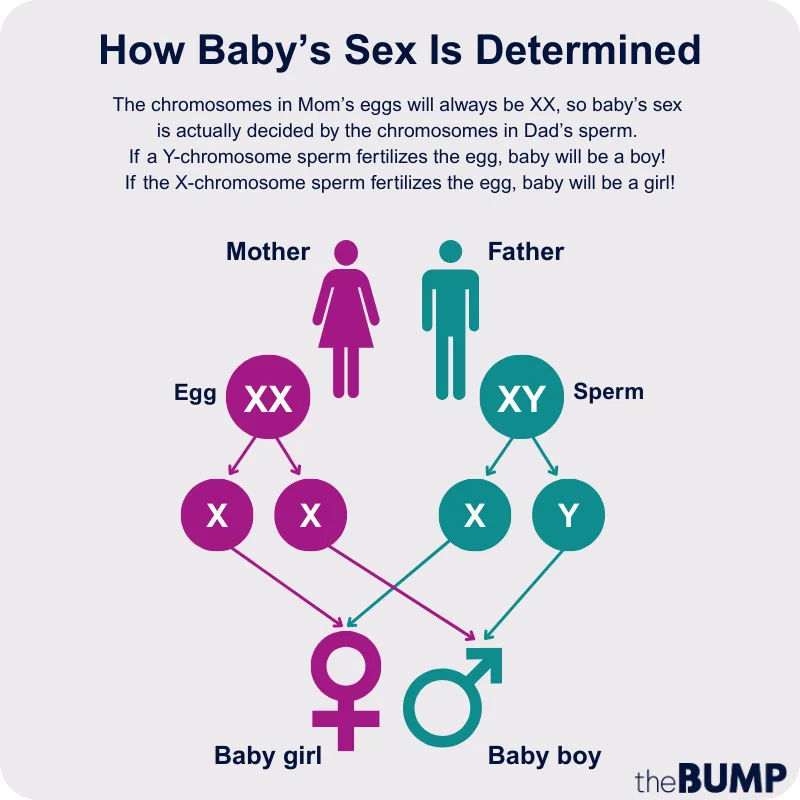
First thing’s first: Let’s freshen up on what makes baby’s biological sex male or female. “It’s determined by the sperm at fertilization,” explains Sasha Hakman, MD, an ob-gyn and reproductive endocrinologist at HRC Fertility in Beverly Hills, California. This is because eggs (which are provided by Mom) only have X chromosomes, while sperm (provided by Dad) carry both X and Y chromosomes. If the sperm is carrying an X chromosome, you’ll have a genetic female; if it’s carrying a Y chromosome, you’ll have a genetic male.
Now for the big question: Can you control baby’s sex at conception? Most experts will tell you that this decision is out of your hands. “There are many theories out there about timing intercourse, diet or positions, but none are scientifically backed,” Hakman says. “Ultimately, natural conception is a 50/50 chance when it comes to having a girl or a boy.”
Kay Waud, MD, an ob-gyn and reproductive endocrinologist at HRC Fertility in San Francisco, adds that, at the time of fertilization, there are millions of sperm surrounding an egg. The sperm that penetrates the egg’s cell membrane and fertilizes it does so randomly and independently of its chromosomal qualities.
Interestingly, though, data shows that “if a couple has more than one of the same sex in a row, they’re going to have a higher likelihood of having that same sex again,” says Shahin Ghadir, MD, an ob-gyn and reproductive endocrinologist at HRC Fertility in Beverly Hills, California.
How to Have a Boy or Girl: Fact Vs. Fiction
There are a lot of theories out there about diets, sex positions, the Shettles method, Whelan method and other ways to control whether you have a boy or a girl. But do any of them have actual science to back them up. Here’s what the experts say.
Diet and nutrition
If you’re wondering how to have a boy, you may have seen theories online that eating a diet high in sodium and potassium can increase the chances of having a boy. Meanwhile, if you’re questioning how to have a girl, you might have read that eating more calcium- and magnesium-rich foods can increase the chances of a girl.
There was also a 2008 study that found an association between eating more calories before conception and increased chances of having a boy. “The evolutionary theory behind this is that male fetuses are larger and grow faster, placing greater metabolic demands on the mother,” explains Sara Vaughn, MD, an ob-gyn and reproductive endocrinologist at HRC Fertility in Silicon Valley, California. “But this idea remains largely theoretical and isn’t backed by strong clinical science… While there may be subtle associations between maternal nutrition and fetal sex, they’re not strong or consistent enough to guide diet choices for sex selection.”
That said, while diet won’t impact baby’s sex, “good nutrition can improve overall fertility, as well as egg and sperm quality,” Hakman says.
Sex positions
Some people believe that certain sex positions, specifically deeper penetration, may increase the likelihood of having a boy. This is thought to be the case because the semen would be deposited closer to the cervix, and “male sperm swim faster and can get the egg sooner than the slower female sperm,” explains Sherry Ross, MD, an ob-gyn and women’s health expert. However, there’s little scientific evidence to back this up. What is known, however, is that, while deeper penetration during ovulation won’t impact baby’s sex, it can increase the likelihood of conception.
We didn’t purposely attempt the Shettles method. My daughter was a surprise and, in hindsight, the timing happened a few days before ovulation. Our next baby was planned and the timing was right when I was ovulating. We have a boy on the way.
The Shettles method
The Shettles method was a theory put forth by Landrum Brewer Shettles, an American ob-gyn, in the 1960s. It claims that the timing of intercourse in regards to ovulation plays a role in baby’s sex. It projects that having sex closer to ovulation leads to better chances for a boy, while having sex earlier than ovulation increases the chances of a girl. This thought is rooted in the belief that Y-chromosome sperm (male sperm) swim faster, do better in alkaline (high or basic pH) environments and have shorter life spans. Meanwhile, X-chromosome sperm (female sperm) are slower, but stronger and tend to last longer.
While hard scientific data is lacking, there is anecdotal evidence from parents who claim the method worked for them. Colorado Babies 12, a community member on The Bump, says that the Shettles method worked when she tried for a girl with her second pregnancy and when she tried for a boy with her third pregnancy. “Maybe it was a coincidence, but that was our plan,” she says. “It has also worked for a few of our friends.”
Still, experts say this is likely coincidental. “Modern studies show no real difference in swimming speed between X and Y sperm,” Vaughn says. “Though intriguing, the Shettles method is not supported by current scientific evidence.”
The Whelan method
Created by researcher Elizabeth Whelan in the 1970s, the Whelan method is in some ways the opposite of the Shettles method. It claims that couples should have sex four to six days before ovulation for a boy and two to three days before ovulation for a girl. The method places an emphasis on estimating ovulation by charting basal body temperature. “The Whelan method is a sex selection technique based on the idea that biochemical changes in a woman’s body during her cycle favor either Y-sperm (for a boy) or X-sperm (for a girl),” Ghadir explains. However, like the Shettles method, the Whelan method lacks modern scientific evidence and support.
The Babydust method
The Babydust method was developed by microbiologist and author Kathryn Taylor. “It’s a modern take on the Shettles method,” Vaughn says. “After seven months of personal research in 2011, Taylor used her timing-based approach to conceive two children and published her method in a 2016 book: The Babydust Method: A Guide to Conceiving a Girl or a Boy.”
Similar to the Shettles method, the Babydust method believes that timing intercourse around ovulation, as well as frequency of intercourse, could impact baby’s sex. If you have sex closer to or on ovulation day, you’ll have higher chances of a boy, and if you have sex a couple of days before ovulation you’ll have higher chances of a girl. However, this too hasn’t been supported by scientific studies and research.
Preimplantation genetic diagnosis
There is one instance where you may be able to choose to have a boy or have a girl, but this is only if you’re trying to get pregnant via in vitro fertilization. In this case, you may be able to use preimplantation genetic diagnosis (PGD) to control baby’s sex, Ross notes. The method looks at what chromosomes the fertilized embryos contain, allowing parents to pick baby’s sex with the embryos they want transferred. It’s important to note that, while PDG isn’t regulated or illegal in the United States, it may be in some countries.
With intrauterine insemination (IUI), embryos aren’t tested, so selecting baby’s sex isn’t guaranteed in the same way. You can use sperm sorting techniques to try to separate sperm by their chromosomes, but it’s still new, experimental technology and not very reliable, Hakman says.
Frequently Asked Questions
Does vaginal pH influence baby’s sex?
Vaginal pH doesn’t influence baby’s sex. As noted, there are theories like the Shettles method that project that Y-chromosome sperm prefer a more basic pH, but these aren’t backed by research—especially since vaginal pH moves from acidic to basic and fluctuates throughout a normal menstrual cycle. “Trying to manipulate it likely won’t make a significant difference in terms of gender selection, but can lead to problems with vaginal health,” Hakman notes.
Do gender selection kits work?
Many gender selection kits that are sold over the counter mimic the methods for gender selection mentioned above, including timing intercourse for conception, dietary adjustment and at-home methods for sperm sorting. These kits are based on older, unproved theories, similar to the Shettles method, Vaughn says, and they’re not scientifically proven or reliable. They are not recommended.
What is the probability of having a girl or a boy?
Most people and experts will say it’s a 50/50 chance, but there’s a “slight bias towards male births,” Vaughn says. According to the World Health Organization, there are about 105 male births for every 100 female births. But while “there are slight variations in the percentage of male vs female in the world’s population, it’s fairly equal,” Hakman adds.
How can you tell if you’re pregnant with a girl or a boy?
Wondering if any of these tales about certain pregnancy symptoms pointing to a certain sex for baby hold any truth? They might, but likely not in a reliable way. A 2015 study found that hCG levels might be higher for female fetuses. Another 2020 study suggested that pregnancy with female fetuses could lead to more nausea and vomiting. “Overall, these associations aren’t strong or reliable enough to actually predict fetal sex,” Vaughn says. “They’re interesting, but not diagnostic.”
Hakman agrees, adding that there are many factors outside of baby’s sex that can influence pregnancy symptoms. Instead, the most reliable way to find out baby’s sex is with non-invasive prenatal testing or through the anatomy scan in the second trimester.
To Sum It Up
Suffice it to say, while there are tons of theories out there that claim you can influence whether you have a girl or a boy, none of them are backed by scientific evidence other than PGD during IVF. Instead of focusing on baby’s sex, focus on making a baby and maintaining a healthy pregnancy.